HOPFENGRUND_
OUR ROOTS ARE IN WINEMAKING.
BEER IS OUR PASSION_
Brewing beer was never a departure from wine for us.
It was another way of working with agriculture, fermentation and time.
We started brewing because we wanted to understand what beer could become when approached with the same attention we give to vineyards, vintages & cellar.

IT STARTS IN THE FIELD_
We grow our own biodynamic hops, grapes and herbs in Hollenburg, Austria. Aurora is the hop variety at the foundation of every beer we brew.
The grapes and grape must we use also come exclusively from our Demeter certified biodynamic Winery "Christoph Hoch".
Growing these ingredients ourselves means working with them throughout the year and deciding when to harvest them.
For grains, we work with two farmers closeby in Austria. These partnerships allow us to work directly with the people growing our ingredients, on land suited to those crops. The Fidesser Family is one of our cornerstones and grows our biodynamic Domen Barley, as well as other tiny projects. Martin Allram grows fantastic Demeter PurPur Wheat in Waldviertel. All in Austria.
GRAIN WITH AN ORIGIN_
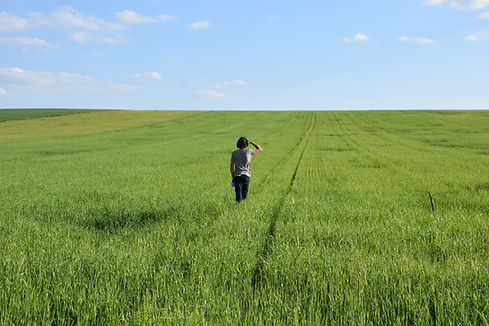
The Fidesser family grows all our grain except purple wheat, which comes from Martin Allram in Waldviertel.
Our Domen barley originates in Norway. We brought the seed into the EU through the Rare Seeds Tour and work with the Fidesser family to grow it for our beers.
Domen is a heritage, true-to-type variety: its seed can be saved and grown again while maintaining the characteristics of the variety. Its a open-pollinated grain, which is the pure origin, but sandy very rare.
Together with Martin Allram’s purple wheat, it forms the grain base of every beer we brew.
These varieties contribute their own flavor and color. Malting, brewing and fermentation then shape how that character develops in the finished beer.
Our Winegrowers Lager follows the same approach. Its flavor and color reflect our grain base, including purple wheat, rather than a predefined idea of how a lager should look or taste.
For us, terroir connects the variety, the place where it grows, the harvest and the people working with it. That includes our own fields in Hollenburg and the Austrian farmers and their philosophy.


MALTED FOR OUR BEERS_
The Farthofer family malts all the grain grown or sourced for our beers. Each batch is malted separately, including the small quantities we work with, keeping it traceable from the farm to the brewhouse.
When we first approached them about single-batch malting, they welcomed the idea. But before starting, they wanted to taste our beers.
They wanted to understand what Hopfengrund_ needed from the malt — and how their work could shape the finished beer.
Together, we developed specifications for extra-pale pilsner malt with a target color of 2–2.5 EBC.
SMALL BATCHES. CLOSE COLLABORATION._
Working at this scale takes careful planning across cultivation, harvest, grain delivery and malting. Keeping small batches separate adds considerable work at every stage.
The Fidesser family makes this possible in the field. The Farthofer family carries it through the malting process. Their expertise and willingness to work with our small quantities allow us to turn ideas into beers.
What we value most is their attention to the finished result.
They took the time to understand our style before deciding how to malt our grain. That care means a great deal to us.

OUR SPRING WATER_
Our brewing water comes from our own spring in Hollenburg, with a starting pH of around 7.5.
We blend it with our own skin-fermented white wine, using the wine’s natural acidity to bring the water mixture to around pH 5.5 before any grain is added.
The entire water-and-wine mixture is then boiled before mashing in.
For this adjustment, we work with an ingredient we grow and make ourselves. Its acidity has a practical role in the brewhouse, connecting our grapes and cellar work to the beer from the very beginning.
Being winemakers shapes how we brew; starting with the water.


BARRELS
WITH A KNOWN HISTORY_
Every barrel we use for beer fermentation & ageing comes from our own winery, Christoph Hoch.
We know its age, which wines it has held and how it has been cleaned, maintained and treated — including its history of sulphuring.
This information matters when choosing a barrel for beer. Its previous contents are only part of the picture; its condition and handling between fillings are equally important.
An emptied barrel needs prompt attention. We manage the transition from wine to beer carefully to keep the wood in good condition and prevent mould or unwanted microbial growth.
Our cellar temperatures remain stable throughout the year at around 10°C. Together with careful barrel maintenance, this supports the conditions we want for fermentation and maturation.
We taste the beers throughout their development and decide when to keep waiting, when to blend and when they are ready.